|
|
SCSRPC Home ►

SCSRPC Coordinator
Thomas H. Terrill
Fort Valley State Univ, GA
SCSRPC Members
Joan M. Burke
USDA, ARS, AR
Paul Casey
Heifer Internationsl, AR
Linda Coffey
NCAT, ATTRA, AR
Nelson Escobar
Univ of Maryland Eastern Shore, MD
Will R. Getz
Fort Valley State Univ, GA
Margo Hale
NCAT, ATTRA, AR
Steve Hart
Langston Univ, OK
Sue Howell
Univ of Georgia, GA
Dahlia Jackson-O'Brien
Delaware State Univ, DE
Ray M. Kaplan
Univ of Georgia, GA
Jean-Marie Luginbuhl
North Carolina State Univ, NC
James E. Miller
Louisiana State Univ, LA
Byeng R. Min
Tuskegee Univ, AL
Seyedmehdi Mobini
Fort Valley State Univ, GA
Jorge Mosjidis
Auburn Univ, AL
Jim Muir
Texas A&M Univ, TX
Susan Schoenian
Univ of Maryland, MD
Bob Storey
Univ of Georgia, GA
Thomas H. Terrill
Fort Valley State Univ, GA
Elide Valencia
Univ of Puerto Rico, PR
Adriano Vatta
Univ of Georgia, GA
Niki Whitley
North Carolina A&T State Univ, NC
Anne Zajac
Virginia Tech, VA
SCSRPC Affiliate Members
Richard Erhardt
Michigan State Univ, MI
Bill Shulaw
Ohio State Univ, OH
Sims Bros
Union Springs, AL
SCSRPC International
Collaborators
Gareth F. Bath
South Africa
Jan A. Van Wyk
South Africa
Felipe Torres-Acosta
Universidad Autonoma de Yucatan Merida, Mexico
Herve Hoste
INRA Toulouse, France
Links ►
Contact Us ►
Website questions or comments? Contact .
|
|
|
|
Sericea Lespedeza
|
| |
|
South African farmer holds second sericea seminar at FVSU
Botha’s back
|
|
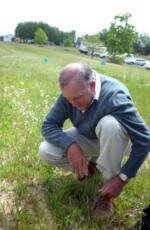
South African beef, dairy and wool sheep producer Hendrik Botha examines a new stand of sericea lespedeza on the Fort Valley State University research station. Botha, who owns a 25,200-acre farm in South Africa, made FVSU his final stop on a weeklong series of workshops in Alabama, Louisiana and Georgia.
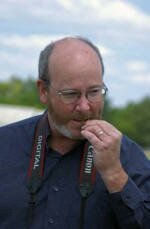
Dr. Thomas Terrill, a research professional in Fort Valley State University’s College of Agriculture, Home Economics and Allied Programs, does a taste test of the newly planted sericea lespedeza at the university’s research station. Terrill, the coordinator of the Southern Consortium for Small Ruminant Parasite Control based at FVSU, sponsored South African farmer Hendrik Botha’s U.S. visit on behalf of the university and invited him to hold one of his lespedeza workshops on the university campus in April.
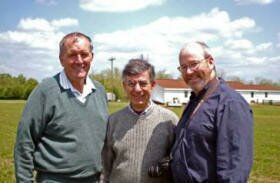
(From left) South African farmer Hendrik Botha, Auburn University’s Dr. Jorge Mosjidis, a professor of plant breeding and genetics, and Dr. Thomas Terrill, a research professional in Fort Valley State University’s College of Agriculture, Home Economics and Allied Programs, pause for a photo during their tour of the FVSU lespedeza plots. The tour followed Botha’s April 15 workshop on the FVSU campus.
|
|

|
South African beef, dairy and wool sheep producer Hendrik Botha is a man on a mission.
A dozen years ago Botha and his sons, Rikus and Francois, planted sericea lespedeza (Lespedeza cuneata) on 170 marginal acres of their 25,200-acre Harmony Farm in KwaZulu Natal province to see if it would grow on their property.
Today – with 1,750 acres of lespedeza growing on the farm for grazing, green chop and baled hay – Botha is spreading the word about the perennial legume’s economic virtues to farmers and scientists in South Africa and the United States.
Last year the 64-year-old farmer spent a day on the Fort Valley State University campus, telling 30 farmers, researchers and educators about the bottom-line benefits a producer finds in growing lespedeza as forage for small and large livestock.
Last week Botha returned to the FVSU Meat Technology Center to repeat and expand his message for nearly two dozen area farmers and university scientists, educators and administrators.
During the two-hour April 15 workshop, which was sponsored by Fort Valley State on behalf of the Southern Consortium for Small Ruminant Parasite Control (SCSRPC) based at the university, Botha told his audience about lespedeza’s economic impact on his farming operation over the past 12 years.
“I’m just a farmer,” Botha said as he began his 45-minute PowerPoint presentation with a virtual tour of his farm.
“I’m happy to share the positive results we’ve achieved over the years at Harmony Farms,” he continued. “Since sericea lespedeza was introduced to South Africa from the United States, if there’s something good that I can bring back here with my knowledge, I’ll be very happy.”
Botha, who’s been farming for 45 years, told workshop participants that the plant he began growing a dozen years ago on a non-productive corner of his farm has transformed his entire livestock operation.
“It’s a miracle to see how this plant – once thought of negatively by many farmers and scientists – has become a vital part of my farm,” he said. “Its potential as an economic engine is enormous and needs to be tapped by producers around the world.”
Dr. Thomas Terrill, the research professional in FVSU’s College of Agriculture, Home Economics and Allied Programs who invited Botha to return to the campus this year, introduced him as “perhaps the world’s greatest authority on managing sericea lespedeza.”
Terrill, who is also the SCSRPC coordinator, added, “We want to pass on his extensive knowledge to American farmers as a means they can use to increase their livestock production profit line.”
During his presentation, Botha outlined lespedeza’s economic advantages, reviewed how and where to establish the forage, and how to successfully manage it.
While discussing how to establish the perennial legume – often on marginal or non-productive acreage – he touched on its possible use in organic beef, dairy and small livestock operations.
“I think that organic production – sheep, goats, cattle, dairy operations – is coming,” he said. “Lespedeza is the ideal pasture to have for that type of production because it builds soil fertility with little or no inputs.”
Throughout his presentation, he cautioned that lespedeza is a long-term investment for producers and means a more economic and efficient farming operation. He said he advised producers looking for a quick turn-around to explore other options or practice patience.
“I don’t hesitate to point out that when I call lespedeza a low-cost investment, I mean a slow process,” he said. “I tell farmers – and scientists – that it’s not forage that’s ready for use overnight. It’s one that means waiting for a couple of years for the plant to establish itself.
“I always say that I don’t make money farming,” he added. “I save money farming. Lespedeza saves me money by cutting a number of operating costs – costs in fuel, fertilizer, parasite medication to name a few – and by putting marginal and non-productive land in use.”
Botha pointed out that his lespedeza research projects from 2001 to 2008 have all aimed directly at assessing the crop’s value to his operation.
“I’m not a researcher,” he said with a chuckle. “But I think I’ve become one.”
He said his four field tests of lespedeza’s value as a livestock fodder have included using his sheep to compare the carrying capacity of lespedeza to native pasture. He also used his dairy and beef cattle to compare lespedeza to fertilized grass as forage.
In each case, he continued, lespedeza has matched or bettered more conventional traditional fertilized forages such as lovegrass.
Botha said his three-year carrying capacity test results indicated that he could successfully feed six sheep on an acre of lespedeza for every single sheep he fed on an acre of native forage. The results of the eight-week beef and dairy feeding trials indicated that lespedeza matched its competition in producing pounds of beef and gallons of milk at less than half the cost.
Since 2005, Botha has also conducted three research projects investigating the use of lespedeza to control internal parasites in sheep for Fort Valley State and the SCSRPC. All of the project have involved Botha, Terrill and Prof. Gareth Bath, a University of Pretoria expert in small stock animal health from the Veterinary Faculty at Onderstepoort, South Africa.
Dr. Jorge Mosjidis, a professor of plant breeding and genetics at Auburn University’s College of Agriculture, said that Botha’s remarks attract the attention of American and South African producers because they recognize that he is actively – and successfully – using the forage to the advantage of his production operation.
“It’s not often that farmers hear recommendations from someone that they can see is literally putting his farm on the line by adopting a new practice,” said Mosjidis, who developed the improved lespedeza types used in South Africa. “It adds significant weight to their appraisal of sericea’s potential benefits to their own operations.”
Terrill said it is critical that Fort Valley State and other institutions interest people in what Botha knows about managing lespedeza because of the poor land found throughout much of the Southeast.
“Our producers need to know more about low-maintenance forages like sericea lespedeza as they cope with rising fuel and other operating costs,” he said. “As Hendrik says, it’s a way to let the soil breathe by naturally adding organic matter and increasing earthworm activity.”
“Sericea is not a miracle plant,” Terrill continued. “It takes management and that is what Hendrik Botha is telling other farmers – establish lespedeza on your poor land – your marginal acreage – to naturally improve it by increasing its organic matter.”
Terrill, who has visited Botha’s farm in Matatiele, South Africa, three times since 2004, said the farmer’s projects have shown lespedeza’s untapped potential to put livestock operations on a more efficient and economical footing.
He said that one future project being explored involves passing Botha’s extensive management experience to small and limited-resource farmers in South Africa and the United States.
Botha’s FVSU workshop was the last of three presentations he made in the United States on behalf of the university and the SCSRCP after arriving on April 8. He called the presentations the highlight of his career.
His first workshop on April 11 was to about 50 scientists, students and educators at Auburn. He followed up with an April 13 presentation to nearly 60 veterinarians and farmers at Louisiana State University in Baton Rouge.
Botha said he thought his presentation at FVSU was the most enjoyable because it attracted the best cross-section of academicians and producers.
“It was a pleasure to have Dr. Mark Latimore Jr. and other administrators participate in my presentation,” he said, referring to the dean of FVSU’s College of Agriculture, Home Economics and Allied Programs. “What we’ve learned about lespedeza is something that needs to spread throughout the agricultural academic community.”
|
|
|
|
